Should You Pay Off Your Mortgage Early? Pros, Cons, and How to Decide
Paying off your mortgage early can save you thousands in interest, but it is not always the smartest first move. Learn when it makes sense and how to decide.
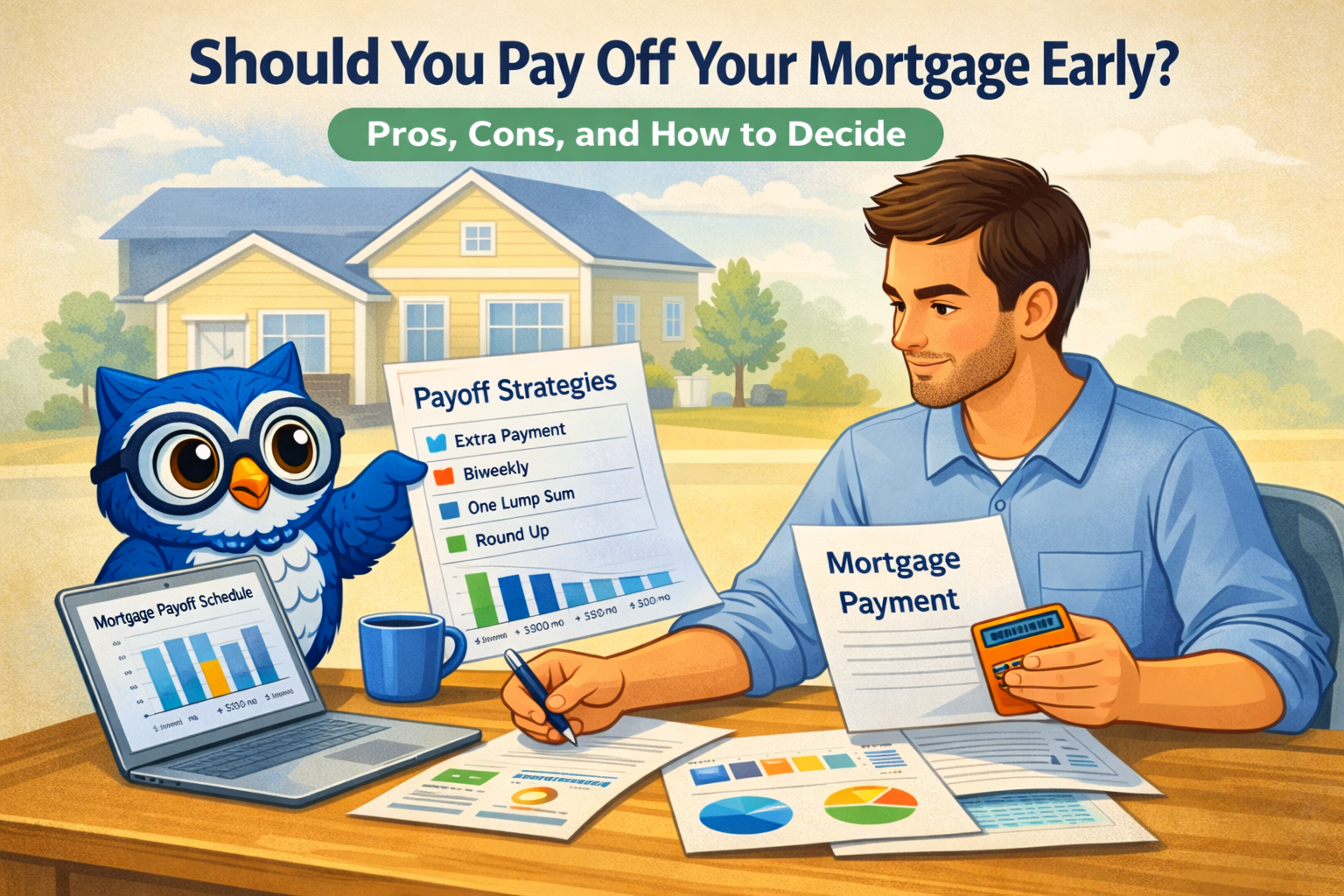
For many homeowners, the idea of becoming mortgage-free early sounds like the ultimate financial win. And in many cases, it can be. Paying extra toward your mortgage can reduce the total interest you pay, shorten your loan term, and free up a huge monthly expense sooner than expected.
But here is the truth: paying off your mortgage early is not always the best first financial move.
Sometimes it makes more sense to build an emergency fund first, wipe out high-interest debt, or invest enough to capture an employer match. The smartest choice depends on your full financial picture.
In this guide, we will walk through the biggest pros and cons of early mortgage payoff, when it makes sense, and how to decide what to prioritize first.
If you want to run the numbers right away, try the BuddyMoney Mortgage Payoff Calculator. And if you are balancing a mortgage against credit cards, personal loans, or other debt, check out the BuddyMoney Debt Payoff Calculator.
Why People Want to Pay Off Their Mortgage Early
A mortgage is usually the largest debt most people will ever carry. Even a relatively low interest rate can cost you tens or even hundreds of thousands of dollars over the life of the loan.
That is why early payoff is so appealing. Every extra payment toward principal can help you:
- reduce total interest paid
- shorten the life of the loan
- build equity faster
- eliminate a major monthly bill sooner
- gain peace of mind
For some people, being debt-free matters just as much as the math.
The Biggest Benefits of Paying Off Your Mortgage Early
1. You can save a lot in interest
This is the biggest financial advantage.
When you make extra principal payments, your loan balance drops faster. That means future interest is calculated on a smaller amount. Over time, that can lead to major savings.
Even small extra payments can make a noticeable difference. A homeowner who adds a little extra each month may cut years off the loan and save thousands in interest.
You can see exactly how much with the Mortgage Payoff Calculator.
2. You become debt-free faster
A 30-year mortgage does not have to last 30 years.
Many homeowners pay off their loans early by:
- adding a fixed extra payment each month
- making one extra mortgage payment per year
- applying bonuses or tax refunds to principal
- rounding up their monthly payment
The earlier you reduce the principal, the more powerful the long-term impact.
3. You free up future monthly cash flow
Once your mortgage is gone, that payment disappears.
That can create more room in your budget for:
- retirement investing
- travel
- saving for college
- helping family
- simply lowering monthly financial stress
A paid-off home can make later financial goals much easier to manage.
4. You may gain peace of mind
Not every financial decision is purely about optimization.
Some people sleep better knowing they own their home outright. That emotional benefit is real. If paying off your mortgage early helps you feel more secure and less financially stretched, that matters too.
When Paying Off Your Mortgage Early Might Not Be the Best First Move
This is where many people go wrong. Mortgage payoff can be a great goal, but not always the first one.
1. You have high-interest debt
If you are carrying credit card debt at 20% or more, that debt is usually costing you far more than your mortgage.
In most cases, it makes more sense to focus on high-interest balances first before sending extra money to a 3% to 7% mortgage.
If you are comparing which debt to attack first, the Debt Payoff Calculator can help you map it out.
2. You do not have an emergency fund
Putting every extra dollar into your mortgage may look disciplined, but it can backfire if you do not have cash reserves.
Without an emergency fund, one job loss, car repair, or medical bill can force you back into credit card debt.
Before aggressively paying down a mortgage, it is often smarter to build a cash cushion. A good starting point is at least a basic emergency fund, with a longer-term goal of several months of essential expenses.
3. You are missing out on retirement match money
If your employer offers a 401(k) match, that is often one of the highest-return moves available to you.
For example, if your employer matches part of your contribution, you may be giving up free money by prioritizing extra mortgage payments first.
A common order of priorities is:
- capture employer match
- build emergency savings
- eliminate high-interest debt
- then decide how aggressively to attack the mortgage
4. Your mortgage rate is very low
If your mortgage rate is unusually low, especially compared with other debt or long-term investment opportunities, early payoff may not be the most efficient use of every extra dollar.
That does not mean paying it off early is wrong. It just means the decision is less obvious. In that case, flexibility, liquidity, and other financial goals matter more.
Signs Paying Off Your Mortgage Early May Make Sense for You
You may be in a strong position to pay off your mortgage faster if most of these are true:
- you have little or no high-interest debt
- you already have emergency savings
- you are contributing to retirement consistently
- your monthly budget is stable
- you want lower fixed expenses in the future
- you value security and peace of mind more than maximum optimization
If that sounds like you, extra mortgage payments can be a very solid next move.
Simple Ways to Pay Off a Mortgage Early
You do not have to double your payment to make progress.
Here are a few realistic strategies.
Add a fixed extra amount each month
Even an extra $50, $100, or $200 per month can shorten your loan and reduce interest.
Make one extra payment each year
Some homeowners use a bonus, tax refund, or a planned savings strategy to make one extra mortgage payment annually.
Round up your payment
Rounding your payment to the next $50 or $100 mark is an easy way to accelerate payoff without overthinking it.
Apply windfalls to principal
Tax refunds, work bonuses, side hustle income, and gifts can all be used to reduce principal faster.
Switch to biweekly payments
In some cases, making half-payments every two weeks results in the equivalent of one extra full payment per year.
Before using any strategy, confirm that your lender applies extra payments to principal and does not charge prepayment penalties.
Mortgage Payoff vs Other Debt: What Should You Pay First?
This is one of the most important questions in personal finance.
As a general rule:
- pay off high-interest debt first
- build emergency savings
- contribute enough for any employer retirement match
- then decide whether to send extra money toward the mortgage
For example:
- A credit card at 24% usually deserves attention before a mortgage at 6%.
- A personal loan at 14% may also be a higher priority.
- A low-rate mortgage may move up the list once costly debt is gone.
This is exactly why it helps to look at your debts together instead of in isolation.
If you want to compare your options, start with the Debt Payoff Calculator, then use the Mortgage Payoff Calculator to estimate how much faster you could become mortgage-free.
Questions to Ask Before Paying Off Your Mortgage Early
Before committing extra money to your home loan, ask yourself:
Do I have enough cash savings?
If the answer is no, building your emergency fund may come first.
Am I carrying expensive debt elsewhere?
If yes, those balances may deserve priority.
Am I saving enough for retirement?
If not, make sure mortgage payoff is not crowding out long-term investing.
How important is peace of mind to me?
For some households, the emotional benefit of a paid-off home is worth a lot.
Do I want flexibility?
Money sent to your mortgage builds equity, but it is no longer easily accessible like cash in savings.
The Bottom Line
Paying off your mortgage early can absolutely be a smart move. It can save you money, shorten your loan term, and give you more financial freedom later.
But it is not automatically the best first move for everyone.
If you still have high-interest debt, no emergency fund, or you are falling behind on retirement savings, your money may work harder elsewhere first. Once those priorities are handled, accelerating mortgage payoff can become a powerful next step.
The best decision is the one that fits your whole financial picture, not just one debt in isolation.
Ready to run the numbers?
- Use the Mortgage Payoff Calculator to see how extra payments change your timeline and interest cost.
- Use the Debt Payoff Calculator if you are deciding between your mortgage and other debts.