How to Save Your First $1,000 (Even on a Tight Budget)
A simple, realistic plan to build your first $1,000 cushion even if money feels tight right now.
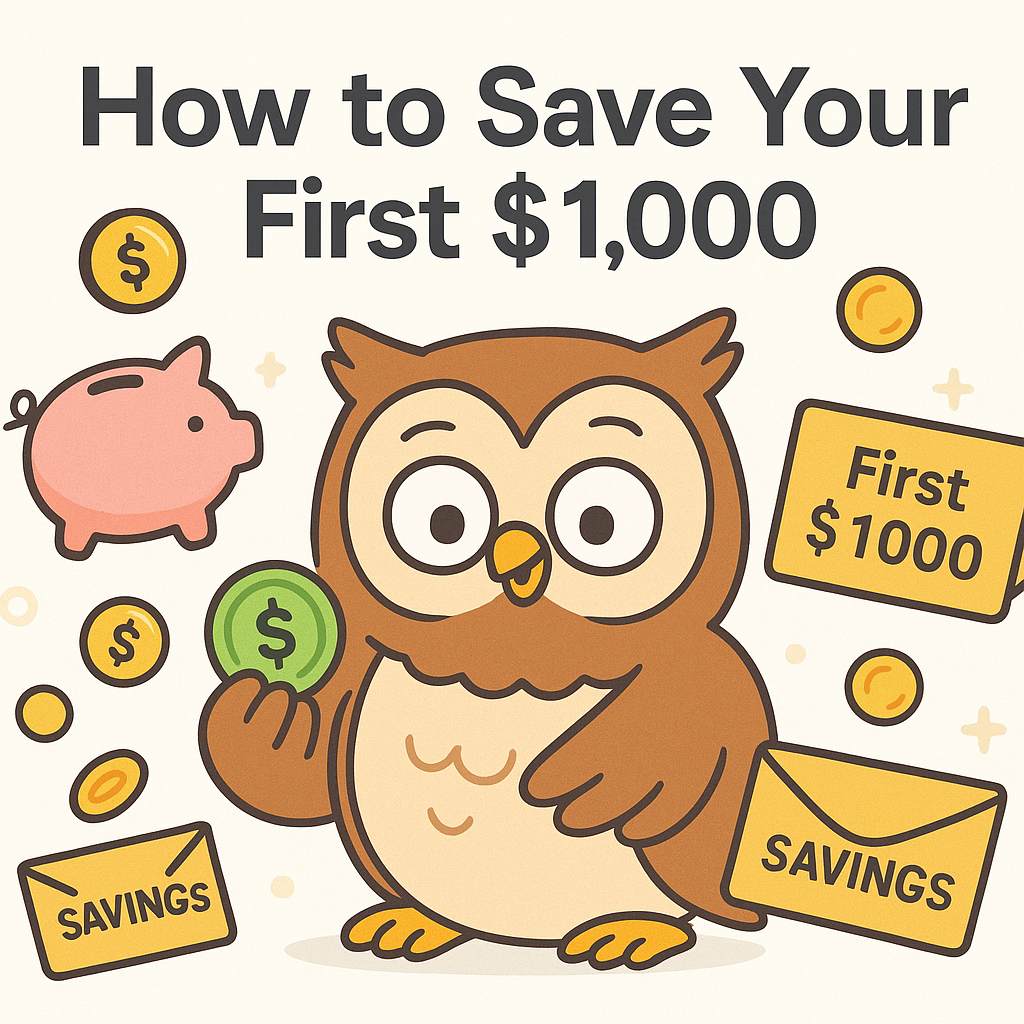
If you’ve never had savings before, your first $1,000 feels impossible and tiny at the same time.
Tiny, because $1,000 doesn’t sound like a lot in a world of high rent and $7 coffees.
Huge, because once you have it, everything about your money feels different: car repairs don’t wreck you, surprise bills don’t send you into panic, and you finally get a little breathing room.
This guide walks you through a simple, realistic plan to save your first $1,000 — even if money is tight, you’re starting from zero, or you’ve tried and “failed” before.
Why Your First $1,000 Matters So Much
Think of this as your Level 1 Emergency Fund.
It’s not a full 3–6 month cushion yet — that comes later. But this first $1,000:
- Keeps small emergencies off your credit cards
- Stops the “one bad week and I’m screwed” feeling
- Gives you a win that makes bigger money goals feel possible
👉 Once you hit $1,000, your next step is building a full safety net:
How to Build a 3–6 Month Emergency Fund
TIP: Start treating this as “do not touch” money unless it’s a true need: car repair, medical bill, essential travel, or keeping the lights on.
Step 1: Pick Your Number and Your Deadline
Yes, the goal is $1,000 — but the real magic is picking a timeline.
Let’s say you want to hit $1,000 in:
- 3 months → about $84/week
- 6 months → about $42/week
- 12 months → about $21/week
Pick the one that feels hard but still realistic for your life.
👉 Use the Savings Goal Calculator to plug in:
- Goal amount:
1000 - Target date
- Contribution frequency
Then the number isn’t random anymore. It’s “I move $42 every Friday”, not just “I should save more.”
Step 2: Do a 10-Minute Money Scan
Before you cut everything fun, just see where your money actually goes.
Grab:
- Last 1–2 months of bank/credit card statements
- A notepad or spreadsheet
- 10 minutes (set a timer)
Group your spending into:
- Must-pay bills (rent, utilities, minimum debt payments)
- Important but flexible (groceries, gas, phone, insurance)
- Everything else (eating out, subscriptions, random Amazon stuff, etc.)
👉 Use the Budget Tracker to quickly plug in your income and expenses. You don’t need perfection — just visibility.
You’re mainly looking for:
- Subscriptions you forgot about
- “Little” daily buys that actually add up
- Any category where you say “wow, I didn’t realize it was that high”
Step 3: Choose 3 Cuts for the Next 30 Days
You do not have to live like a monk forever. But for the next 30 days, you are going to run a small experiment.
Pick any three:
- Eat out one less time per week
- Pause 1–3 streaming services
- Limit delivery apps to once per week or less
- Cut impulse Amazon buys (48-hour rule)
- Bring coffee/snacks from home
NOTE: This is temporary, not your new permanent life.
Every dollar you free up from these cuts gets moved to your savings.
If you can free $80–$100/month, that’s a massive start.
Step 4: Add “Boost” Money from a Side Hustle
Cutting expenses helps — but income is where things accelerate.
Think of this as a temporary engine to reach $1,000 faster.
Quick-win ideas:
- Rideshare or delivery
- Sell unused items
- Pet sitting or babysitting
- Freelance small tasks
- Local gigs (yard work, cleaning, tutoring)
👉 Want more ideas? Read:
TIP: Send all side hustle money directly to savings.
Step 5: Put Your Savings on Autopilot
Willpower fades — automation doesn’t.
Open a separate savings account
Set up automatic transfers:
- Weekly (ex: $25 every Friday)
- Monthly (ex: $100 on payday)
Name the account something motivating:
- “First 1K Safety Net”
- “Emergency Level 1”
- “Future Me Fund”
👉 Track your progress using the Savings Goal Planner.
WARNING: Don’t invest this money. This is about stability, not growth.
Step 6: Protect the Money from Yourself
Saving is one skill. Keeping it saved is another.
Make it harder to spend:
- Use a separate bank
- Disable easy access
- Don’t link to payment apps
- Hide it from your main dashboard
Only use it for real emergencies.
👉 This is your first step toward a full safety net:
What Is an Emergency Fund?
Step 7: Use Windfalls Wisely
Unexpected money:
- Tax refunds
- Bonuses
- Gifts
- Selling items
Make this rule:
👉 Until you hit $1,000, send 50–80% of any windfall to savings.
This can cut your timeline dramatically.
What To Do After You Hit $1,000
First: celebrate. Seriously.
Then:
- Build toward a full emergency fund
- Or start attacking high-interest debt
👉 Tools to help:
A Simple Plan You Can Start Today
- Pick your timeline
- Calculate your weekly/monthly savings
- Cut 3 expenses
- Add extra income
- Automate savings
- Protect the account
- Use windfalls wisely
You don’t need perfection — just consistency.
Final Thoughts
This first $1,000 is more than money.
It’s:
- Less stress
- More control
- Proof that you can change your financial situation
👉 If you want a guided starting point, try Budget Coach to map your money in minutes.
Start small. Stay consistent.
This is where everything changes. 💚