What Happens If You Only Make the Minimum Payment on a Credit Card?
Learn what happens when you only make the minimum payment on a credit card, how long debt can take to repay, and how to pay it off faster.
What Happens If You Only Make the Minimum Payment on a Credit Card?
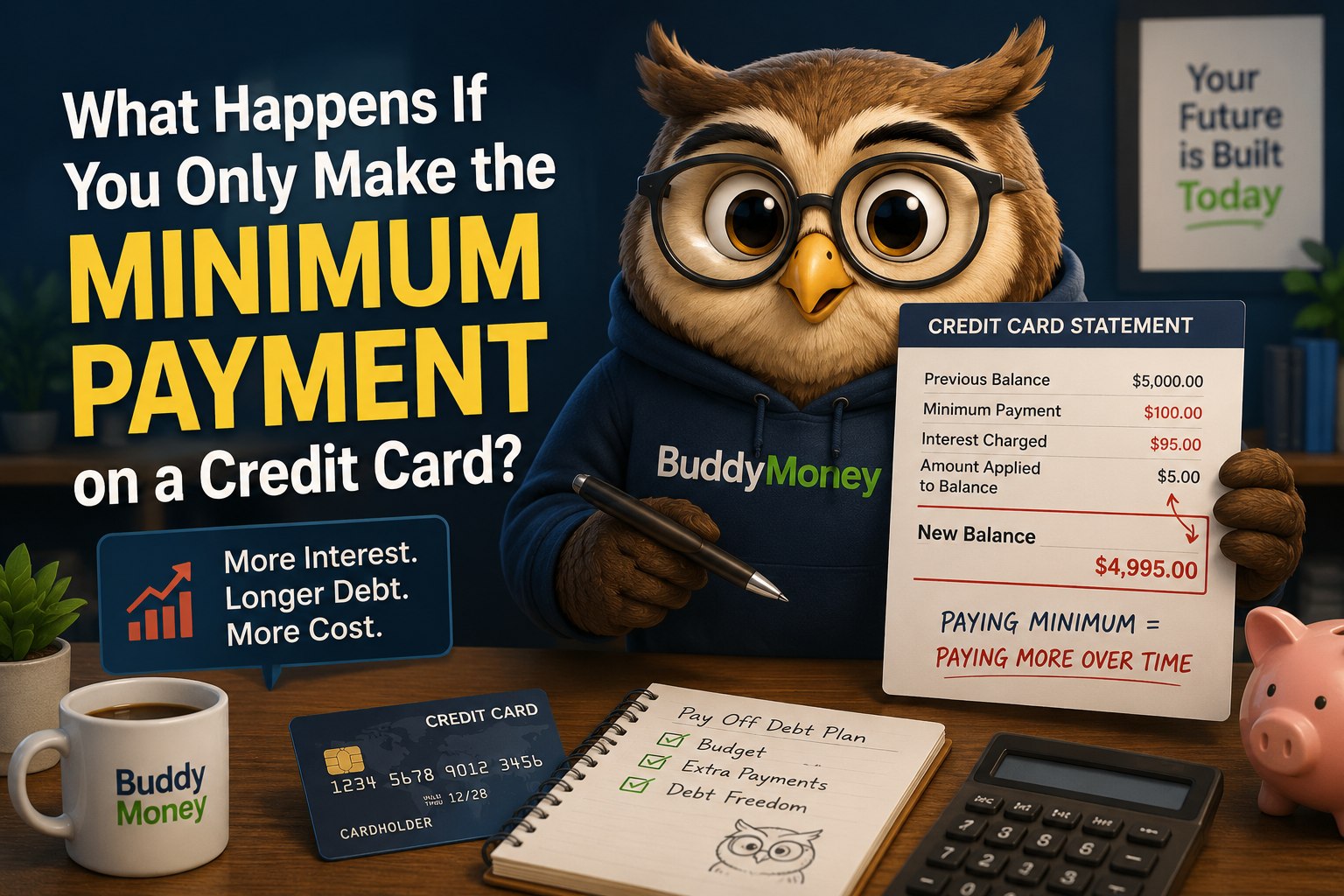
If you only make the minimum payment on a credit card, you can stay in debt for years, pay much more in interest, and make very slow progress toward your balance.
Making the minimum payment keeps your account current.
That part is good.
But if you only pay the minimum every month, your credit card debt can become very expensive.
Many people do not realize how long it can take to pay off a balance when most of the payment goes toward interest instead of the actual debt.
The Simple Answer
When you only make the minimum payment:
- You avoid late fees
- You protect your payment history
- You stay current with the credit card company
- But your balance goes down very slowly
- You may pay hundreds or thousands in interest
👉 Want to see your own payoff timeline? Try the Debt Payoff Calculator.
Why Minimum Payments Are So Costly
Credit cards charge interest when you carry a balance.
That interest is usually shown as an APR, or annual percentage rate.
Many credit cards have APRs above 20%.
That means a large part of your minimum payment may go toward interest instead of reducing your balance.
Example: $5,000 Credit Card Balance
Here is a simple example:
| Balance | APR | Payment Strategy | Result |
|---|---|---|---|
| $5,000 | 24% | Minimum payment only | Years of payments and high interest |
| $5,000 | 24% | Extra monthly payments | Faster payoff and less interest |
The exact payoff time depends on your card’s minimum payment formula, interest rate, and balance.
But the lesson is simple:
👉 Paying more than the minimum can save serious money.
What Minimum Payments Usually Cover
A credit card minimum payment usually includes:
- Interest charges
- A small percentage of your balance
- Any fees or past-due amounts
This is why the balance may barely move after each payment.
You might pay $100, but only part of that amount reduces the debt.
Does Making the Minimum Payment Hurt Your Credit?
Making the minimum payment on time does not hurt your credit by itself.
In fact, paying at least the minimum helps protect your payment history.
Payment history is one of the most important parts of your credit score.
But there is a catch.
If your balance stays high, your credit utilization may also stay high.
That can hurt your credit score.
What Is Credit Utilization?
Credit utilization is how much of your available credit you are using.
For example:
| Credit Limit | Balance | Utilization |
|---|---|---|
| $5,000 | $4,500 | 90% |
| $5,000 | $2,500 | 50% |
| $5,000 | $500 | 10% |
Lower utilization is usually better for your credit score.
So even if you make every minimum payment on time, a high balance can still hold your score back.
Is It Ever Okay to Make Only the Minimum Payment?
Yes, sometimes.
If money is tight, making the minimum payment is better than missing a payment.
It can help you avoid:
- Late fees
- Penalty APRs
- Credit score damage
- Collection problems
But minimum payments should usually be a temporary solution, not a long-term plan.
When Minimum Payments Become Dangerous
Minimum payments become risky when:
- You keep using the card while paying it down
- Your balance keeps growing
- You cannot afford more than the minimum
- You are relying on credit cards for basic expenses
- You have multiple cards with high balances
If this sounds familiar, it may be time to make a debt payoff plan.
👉 Start here: Crush Credit Card Debt
How to Pay Off Credit Card Debt Faster
The good news is that even small extra payments can help.
1. Pay more than the minimum
Even an extra $25 or $50 per month can reduce interest and shorten your payoff timeline.
2. Stop adding new charges
It is hard to escape credit card debt if the balance keeps growing.
3. Use a payoff strategy
Two common methods are:
- Debt snowball: Pay the smallest balance first
- Debt avalanche: Pay the highest-interest balance first
👉 Compare payoff timelines with the Debt Payoff Calculator.
4. Build a basic budget
A simple budget helps you find extra money for debt payments.
👉 Try the Budget Tracker.
5. Consider consolidation carefully
Debt consolidation can help some people lower interest, but it is not magic.
👉 Learn more in the Debt Consolidation Guide.
Common Mistakes to Avoid
- Making only the minimum forever
- Continuing to use the card heavily
- Ignoring the interest rate
- Applying for more cards to cover payments
- Missing payments because you feel overwhelmed
Frequently Asked Questions
Is it bad to only make the minimum payment on a credit card?
It is not bad for avoiding late fees, but it can be very expensive over time because interest keeps building.
Will paying only the minimum hurt my credit score?
Paying the minimum on time protects your payment history, but a high balance can hurt your credit utilization.
Why do credit card companies allow minimum payments?
Minimum payments keep your account current while allowing the lender to collect interest over time.
What is the fastest way to pay off credit card debt?
Pay more than the minimum, stop adding new charges, and focus extra payments on your highest-interest debt.
Should I use a debt payoff calculator?
Yes. A calculator can show how long payoff may take and how much interest you could save by paying extra.
Final Thoughts
Making the minimum payment is better than missing a payment.
But if you only pay the minimum every month, credit card debt can last much longer than expected.
The best move is to pay more than the minimum whenever possible, stop adding new debt, and create a clear payoff plan.
👉 Build your plan with the Debt Payoff Calculator
👉 Organize your spending with the Budget Tracker
👉 Learn more: Crush Credit Card Debt