
How to Rebuild Credit With a Secured Credit Card (Step-by-Step)
Learn how to rebuild your credit with a secured credit card, improve your credit score, and avoid common mistakes that slow your progress.
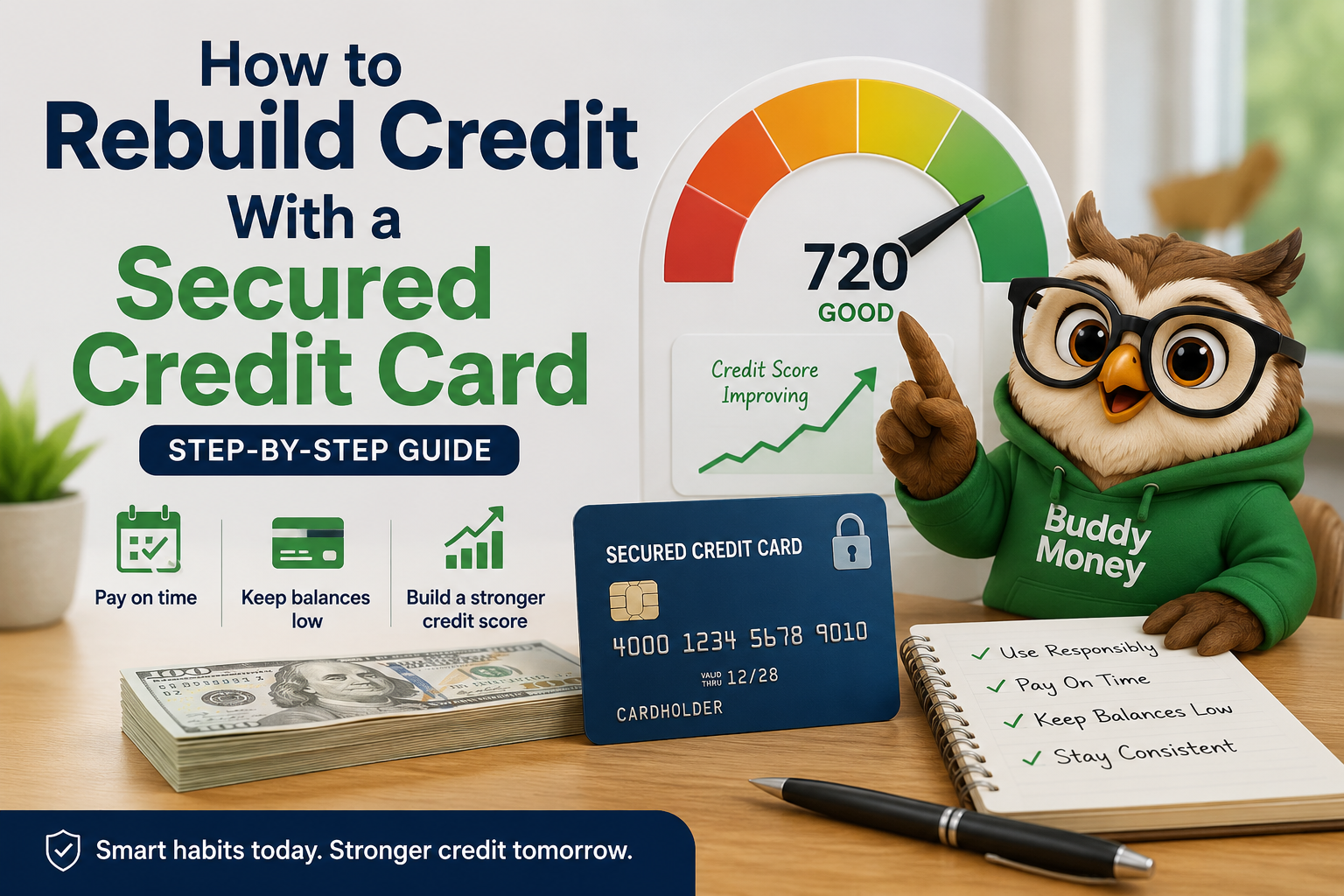
If your credit score has taken a hit, a secured credit card can be one of the fastest and safest ways to start rebuilding it.
The good news is that you don't need a perfect credit history to qualify for most secured cards. In fact, they are specifically designed for people who are rebuilding credit after financial setbacks.
This guide explains exactly how secured credit cards work and how to use one to improve your credit score.
How Do You Rebuild Credit With a Secured Credit Card?
To rebuild credit with a secured credit card:
- Open a secured card that reports to all three credit bureaus.
- Use the card for small purchases each month.
- Keep utilization below 30%.
- Pay every bill on time.
- Avoid applying for unnecessary credit.
- Continue using the card consistently for several months.
Many people begin seeing credit score improvements within three to six months.
What Is a Secured Credit Card?
A secured credit card works like a regular credit card, but it requires a refundable security deposit.
For example:
- Deposit: $300
- Credit Limit: $300
You use the card normally and make monthly payments.
Many secured card issuers report your activity to all three major credit bureaus:
- Experian
- Equifax
- TransUnion
That reporting helps build positive payment history.
How a Secured Credit Card Helps Your Credit Score
Credit scores are influenced by several factors.
The biggest factors include:
Payment History (35%)
Pay every bill on time.
Even one missed payment can significantly damage your score.
Credit Utilization (30%)
This measures how much of your available credit you're using.
Example:
- Limit: $500
- Balance: $50
- Utilization: 10%
Keeping utilization below 30% is generally recommended.
Below 10% is even better.
Length of Credit History
The longer your accounts remain open and in good standing, the better.
Step 1: Open a Secured Credit Card
Choose a card that:
- Reports to all three credit bureaus
- Has low fees
- Offers graduation to an unsecured card
Many reputable secured cards offer these features.
Step 2: Use the Card Every Month
A common mistake is opening a secured card and never using it.
Instead, put one small recurring expense on the card:
- Netflix
- Spotify
- Phone bill
- Gas purchase
This keeps the account active.
Step 3: Keep Utilization Low
Try to use less than 30% of your available credit.
Example:
If your limit is $300:
- Good: $30–$90 balance
- Better: Under $30
Low utilization can help your score improve faster.
Step 4: Pay On Time Every Month
Set up:
- AutoPay
- Calendar reminders
- Banking alerts
Payment history is the most important factor in your credit score.
Step 5: Be Patient
Credit rebuilding takes time.
Many people begin seeing improvement within:
- 3 months
- 6 months
- 12 months
The exact timeline depends on your credit history and financial habits.
Common Mistakes to Avoid
Missing Payments
Late payments can undo months of progress.
Maxing Out the Card
High utilization may hurt your score.
Applying for Too Many Cards
Multiple hard inquiries can temporarily lower your score.
Closing the Card Too Soon
Older accounts often help your credit profile.
How Much Can Your Credit Score Increase?
Every credit profile is different.
However, responsible use of a secured credit card often leads to meaningful score improvements over time.
The keys are:
- Paying on time
- Keeping balances low
- Avoiding unnecessary debt
Final Thoughts
A secured credit card is one of the most effective tools available for rebuilding credit.
Used correctly, it can help establish positive payment history, lower utilization, and improve your overall credit profile.
The process isn't instant, but consistency can make a significant difference over time.