
How Long Does It Take to Rebuild Credit With a Secured Credit Card? (2026 Guide)
Learn how long it may take to rebuild credit with a secured credit card, what affects your progress, and the habits that can help improve your credit over time.
Rebuilding your credit can feel slow, especially when you are trying to recover from past mistakes or build credit for the first time.
A secured credit card is one of the most common tools people use to rebuild credit because it works like a regular credit card while reducing risk for lenders.
But one of the biggest questions beginners ask is:
How long does it actually take for a secured credit card to improve your credit score?
The short answer: many people may start seeing changes within 3 to 6 months, but building strong credit usually takes 12 months or longer of consistent responsible use.
How Does a Secured Credit Card Help Rebuild Credit?
A secured credit card requires a refundable security deposit. This deposit usually becomes your credit limit.
For example:
- $200 deposit = $200 credit limit
- $500 deposit = $500 credit limit
The card issuer reports your activity to the credit bureaus, including:
- payment history
- account age
- credit utilization
These factors can help rebuild your credit profile over time.
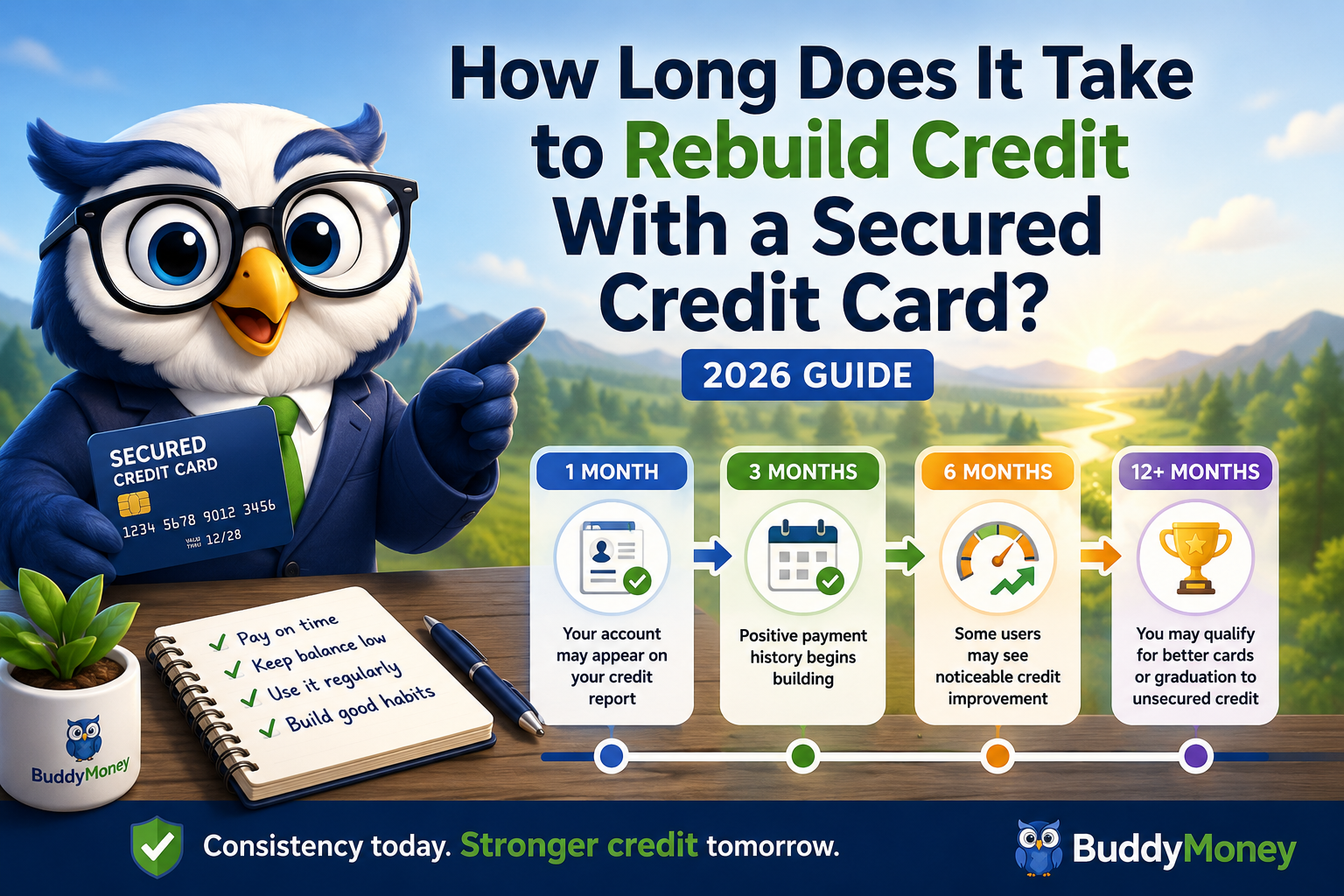
Secured Credit Card Rebuilding Timeline
Everyone's credit situation is different, but here is a general timeline.
| Time Using Card | What May Happen |
|---|---|
| First month | Your new account may appear on your credit report |
| 3 months | Positive payment history begins building |
| 6 months | Some users may see noticeable credit improvement |
| 12+ months | You may qualify for better cards or graduation to unsecured credit |
Remember, results are never guaranteed because your credit score depends on your entire credit history.
How to Improve Your Credit Faster With a Secured Card
A secured card only helps if you use it correctly.
Follow these habits:
- Pay every bill on time
Payment history is one of the biggest factors affecting credit scores.
Even one missed payment can hurt progress.
- Keep your balance low
Try to avoid using your entire credit limit.
Example:
If your limit is $300, keeping your reported balance below $90 helps keep utilization under 30%.
Lower utilization is often better.
- Use the card every month
You do not need to carry debt to build credit.
A simple strategy:
- Buy something small
- Wait for the statement
- Pay it off completely
- Avoid applying for too much credit
Opening many accounts quickly may slow your progress because each application can create a hard inquiry.
Focus on building good habits first.
Can a Secured Card Raise Your Score in 30 Days?
Sometimes changes can happen quickly, especially if you had little or no credit history before.
However, rebuilding damaged credit usually takes longer.
Think months and years — not days.
A secured card is a tool for building consistency.
When Can You Upgrade From a Secured Credit Card?
Some credit card companies review accounts after several months of responsible use.
You may eventually qualify for:
- your deposit returned
- a higher credit limit
- an unsecured credit card
Not all secured cards graduate automatically, so check the card terms before applying.
Is a Secured Credit Card Worth It?
For many beginners, yes.
A secured credit card can be a simple way to:
- establish credit history
- rebuild after setbacks
- practice responsible habits
- prepare for future financial goals
The key is using it as a credit-building tool — not as extra money to spend.
More Secured Credit Card Resources
Building credit is a process, and choosing the right starting point matters.
You may also find these BuddyMoney guides helpful:
- Can you get a secured credit card with no deposit?
- What credit score do you need for a secured credit card?
Learning how secured cards work can help you avoid surprises and build stronger financial habits.
Final Thoughts
Rebuilding credit takes patience, but small consistent actions matter.
A secured credit card used responsibly for 6 to 12 months may help create a stronger foundation for your financial future.
Focus on:
✅ paying on time
✅ keeping balances low
✅ using credit responsibly
Over time, those habits can make a meaningful difference.