
Does Checking Your Credit Score Lower It? (2026 Guide)
Learn whether checking your credit score hurts your credit, the difference between soft and hard inquiries, and how to monitor your score safely.
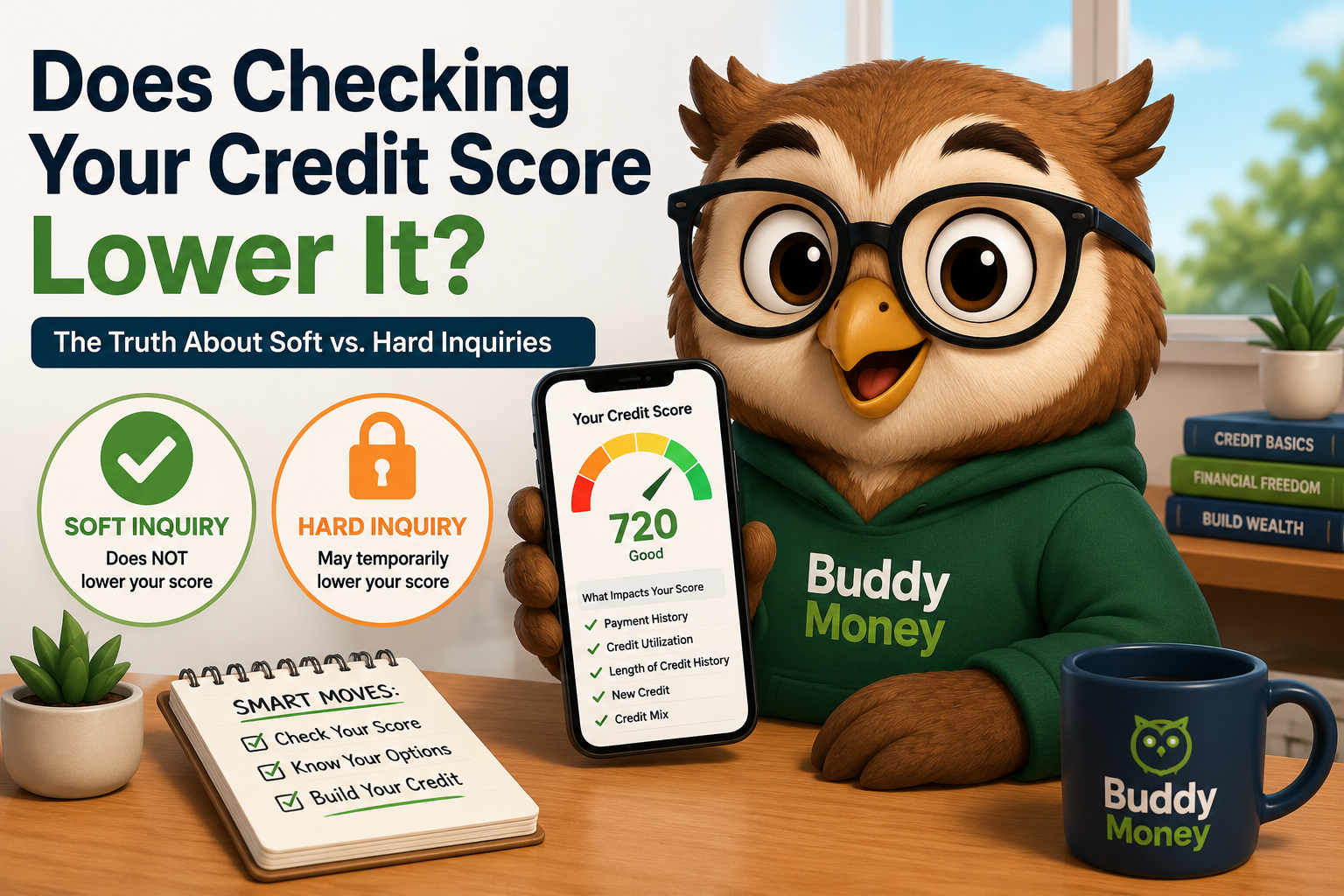
Checking your own credit score does not lower your credit score.
This is one of the most common credit myths. You can check your own score regularly without hurting your credit.
The confusion comes from the difference between a soft inquiry and a hard inquiry.
Does Checking Your Own Credit Score Hurt Your Credit?
No. Checking your own credit score is considered a soft inquiry (or soft pull).
Soft inquiries:
- Do not affect your credit score
- Are only visible to you
- Can happen when you check your own credit
Examples include:
- Checking your score through your bank
- Using a credit monitoring service
- Reviewing your own credit report
Monitoring your credit is actually a smart financial habit.
What Is a Hard Credit Inquiry?
A hard inquiry happens when a lender checks your credit because you applied for a new financial product.
Examples:
- Applying for a credit card
- Applying for a car loan
- Applying for a mortgage
- Requesting certain credit increases
Hard inquiries can temporarily lower your score by a few points.
Soft Inquiry vs Hard Inquiry
Soft inquiry
- Checking your own credit
- Prequalification checks
- Credit monitoring
Impact:
✅ Does not lower your score
Hard inquiry
- New credit applications
- Loan approvals
- Credit decisions
Impact:
⚠️ May temporarily lower your score
How Much Does a Hard Inquiry Lower Your Credit Score?
A hard inquiry usually has a small impact.
For many people, it may lower a credit score by fewer than 5 points, although the exact impact depends on your overall credit history.
The effect is usually temporary.
Payment history, credit utilization, and account history usually matter much more.
How Often Should You Check Your Credit Score?
Checking your credit regularly can help you:
- Catch mistakes
- Notice fraud
- Track improvement
- Understand what affects your score
Many people check their score monthly.
Does Checking Your Credit Report Lower Your Score?
No.
Checking your own credit report does not hurt your score.
Your credit report shows information like:
- Open accounts
- Payment history
- Balances
- Credit inquiries
Reviewing it can help you find errors.
How to Improve Your Credit Score
If you want to build stronger credit:
- Pay every bill on time
- Keep credit card balances low
- Avoid unnecessary applications
- Keep older accounts open when possible
- Monitor your credit regularly
If you are rebuilding credit, a secured card may help you establish positive payment history.
👉 Read: Best Secured Credit Cards for Building Credit
Can Checking Credit Before Applying Help?
Yes.
Checking your score before applying for a card or loan can help you understand your options.
You can also compare card types before applying:
👉 Try the BuddyMoney Credit Card Finder
Frequently Asked Questions
Does checking my credit score lower it?
No. Checking your own credit score is a soft inquiry and does not hurt your credit.
Why did my score drop after checking it?
The check itself did not cause the drop. Other factors like balances, payments, or new applications may have changed.
How many times can I check my credit score?
You can check your own credit score as often as you want without lowering it.
Do credit card companies checking my score hurt it?
Prequalification checks usually do not hurt your score. A formal application usually creates a hard inquiry.
Final Thoughts
Checking your credit score does not hurt your credit.
In fact, monitoring your score can help you make smarter financial decisions, catch problems earlier, and track your progress over time.
The key difference is simple:
Checking your own credit = no score damage.
Applying for new credit = possible temporary impact.
Use your score as a tool, not something to be afraid of.