Debt Consolidation Guide (Beginner-Friendly, No Jargon)
Struggling with multiple debts? Debt consolidation can simplify payments and help you regain control — if you choose the right option.
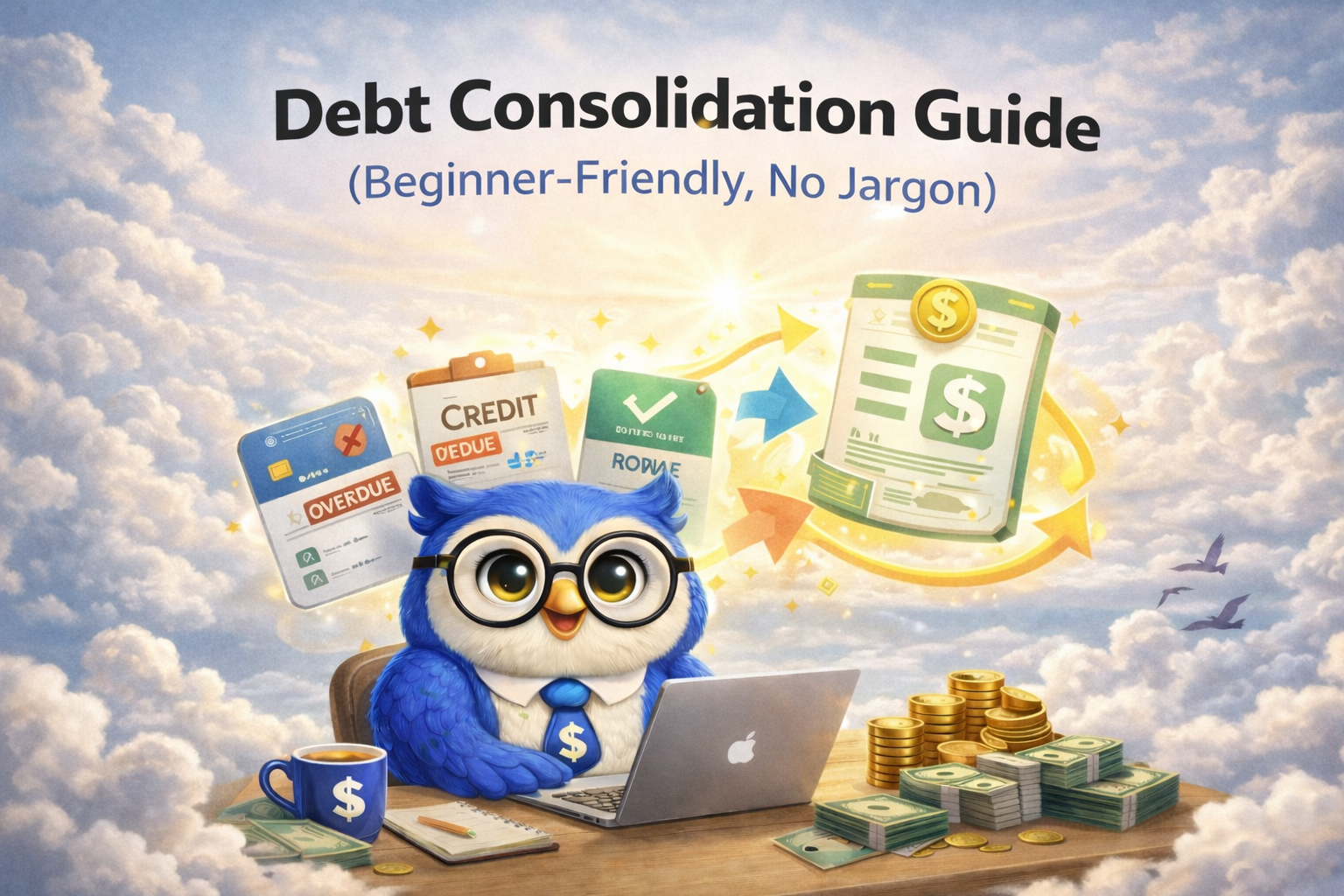
If you’re juggling multiple debts and feeling overwhelmed, you’re not alone. Credit cards, medical bills, and personal loans can quickly turn into a confusing maze of due dates, interest rates, and minimum payments.
Many people look for ways to consolidate debt and lower interest rates, but the wrong approach can make things worse instead of better.
Debt consolidation is one way to simplify things — but only when it’s used correctly. This guide explains how debt consolidation works, when it makes sense, which options exist, and how to avoid common mistakes.
What Is Debt Consolidation?
Debt consolidation means combining multiple debts into one single payment.
Instead of tracking several balances and due dates, you replace them with:
- One monthly bill
- One interest rate
- One clear payoff timeline
The goal is not just convenience — it is regaining control and creating a realistic path out of debt.
Debt consolidation does not erase debt. It simply reorganizes it in a way that may be easier and cheaper to manage.
A Simple Debt Consolidation Example
Here is a basic example.
Suppose you have:
- Credit card A: $4,000 at 27% APR
- Credit card B: $2,500 at 24% APR
- Personal loan: $3,500 at 16% APR
That is $10,000 total debt spread across multiple payments.
If you qualify for a consolidation loan at 12% APR with a fixed term, you may be able to:
- combine everything into one payment
- reduce total interest over time
- create a clear payoff date
- lower the risk of missing a payment
The exact savings depend on fees, payoff speed, and whether the new rate is actually lower than your current average.
👉 Before choosing any option, test your numbers with the Debt Payoff Calculator.
When Debt Consolidation Makes Sense
Debt consolidation may be a good option if:
- You are managing multiple high-interest debts
- You are struggling to keep track of due dates
- You want a predictable monthly payment
- You can qualify for a lower rate
- You are committed to not adding new debt
It works best when consolidation helps lower stress, reduce interest, and improve consistency.
When Debt Consolidation Is NOT a Good Idea
Debt consolidation is not always the right move.
It may not make sense if:
- The new interest rate is higher than your current average
- Fees cancel out most of the savings
- You plan to keep using your credit cards heavily
- You are mainly looking for a temporary payment break
- You have not addressed the habits that caused the debt
In those cases, consolidation can delay progress instead of improving it.
A lower monthly payment can look attractive, but if it stretches your debt over a much longer period, you may pay more overall.
Common Debt Consolidation Options
There is no one-size-fits-all solution. Here are the most common approaches.
Balance Transfer Credit Cards
Balance transfer cards let you move existing credit card balances onto a new card, often with a temporary 0% introductory APR.
Best for:
- Good or excellent credit
- Credit card debt only
- People who can pay off debt during the intro period
Things to watch out for:
- Balance transfer fees
- High interest after the intro period ends
- Temptation to keep using old cards
👉 Before choosing this route, map out your payoff timeline using the Debt Payoff Calculator so you know whether you can realistically finish before the promotional period expires.
Personal Loans for Debt Consolidation
A personal loan can be used to pay off multiple debts at once, replacing them with a fixed monthly payment and a defined payoff date.
Best for:
- People who want a clear end date
- Borrowers who prefer predictable payments
- Those who can qualify for a lower fixed rate
Things to watch out for:
- Interest rates vary by credit profile
- Some loans include origination fees
- Longer terms can increase total interest paid
Credit Counseling and Debt Management Plans
Non-profit credit counseling agencies can help organize debts into a structured repayment plan without taking out a new loan.
Best for:
- People struggling to manage payments
- Those who want professional guidance
- People who need structure more than speed
Things to watch out for:
- Slower progress in some cases
- Monthly program fees
- Possible impact on access to new credit during the plan
Compare Debt Consolidation Options
Balance transfer card
- Best for: Good credit and a fast payoff plan
- Main benefit: Temporary 0% APR
- Main risk: High APR later if the balance is not paid off in time
Personal loan
- Best for: Fixed payoff plan
- Main benefit: One payment and a clear timeline
- Main risk: Fees or higher total cost if the term is too long
Debt management plan
- Best for: People who need guidance and structure
- Main benefit: Organized repayment help
- Main risk: Slower process and less flexibility
This is why comparing total cost, not just monthly payment, matters so much.
How Debt Consolidation Actually Helps
When done correctly, consolidation can:
- Reduce missed payments
- Simplify monthly budgeting
- Lower stress and decision fatigue
- Create a realistic payoff timeline
- Potentially reduce interest costs
It does not erase debt — it reorganizes it in a way that is easier to manage.
For many people, the biggest benefit is not emotional relief alone. It is finally being able to follow a plan.
How to Choose the Right Consolidation Option
Before committing, ask yourself:
- What is my current average interest rate?
- Will this option lower my total repayment cost?
- Is the monthly payment sustainable long-term?
- Are there any fees involved?
- How long will repayment take?
Choosing the right option is about total cost, sustainability, and consistency — not just the lowest payment.
A smart debt move should make your future easier, not just your next month.
Common Debt Consolidation Mistakes
Avoid these common pitfalls:
- Focusing only on monthly payment instead of total cost
- Ignoring fees
- Closing old accounts too quickly
- Running balances back up after consolidation
- Choosing a loan term that is too long
- Ignoring budgeting and spending habits
👉 If spending habits are part of the problem, use the Budget Tracker to understand where your money is going each month.
Debt consolidation works best when it is part of a broader financial reset.
Debt Consolidation vs. Debt Settlement
These two terms sound similar, but they are not the same.
Debt consolidation means combining debts into a simpler repayment plan.
Debt settlement usually means trying to negotiate a lower payoff amount, often after falling behind on payments.
Debt settlement can carry more credit risk and is a very different strategy. If your main goal is to simplify repayment while staying current, debt consolidation is usually the more straightforward option.
Should You Consolidate Debt or Pay It Off Aggressively?
Sometimes the best move is not consolidation at all.
If your debts are manageable and you already have a strong payoff plan, you may be better off attacking balances directly using a method like:
- highest interest first
- smallest balance first
- fixed monthly overpayments
👉 Use the Debt Payoff Calculator to compare your payoff timeline before and after consolidation.
That way you can see whether consolidation actually improves your situation or just changes the shape of your payments.
How Long Does Debt Consolidation Take to Work?
Results vary, but many people notice:
- Immediate simplification of payments
- Improved on-time payment history within 1–2 months
- Steady progress as balances decrease over time
The biggest benefits come from consistency, not speed.
Debt consolidation is not a quick fix. It works when you stick with the plan and avoid rebuilding balances.
Final Thoughts
Debt consolidation is not a shortcut — it is a tool. Used wisely, it can help you regain control, reduce stress, and create a clear plan to become debt-free.
The right choice depends on:
- your interest rates
- your credit profile
- your monthly budget
- your ability to stop adding new debt
👉 Build your plan first with the Debt Payoff Calculator so you know exactly how long your journey will take.
👉 Then use the Budget Tracker to make sure your monthly plan is realistic.
The most important step is choosing an option that truly improves your finances — and committing to the habits that keep debt from coming back.
Progress happens one payment at a time.
Debt Consolidation FAQs
Does debt consolidation hurt your credit?
It can affect your credit in different ways depending on the method. Applying for new credit may cause a small temporary dip, but making on-time payments consistently can help over time.
Is debt consolidation a good idea for credit card debt?
It can be, especially if you qualify for a lower rate or a structured payoff plan. The key is avoiding new balances after consolidation.
What credit score do you need for debt consolidation?
It depends on the lender or balance transfer card. In general, better credit gives you access to better rates and terms.
Is a personal loan better than a balance transfer?
It depends on your situation. A balance transfer may work better for short-term payoff with strong credit, while a personal loan may be better if you want fixed payments and a clear end date.
What is the biggest mistake people make with debt consolidation?
One of the biggest mistakes is consolidating debt, then running balances back up again. Consolidation only works when it is paired with better spending and repayment habits.